
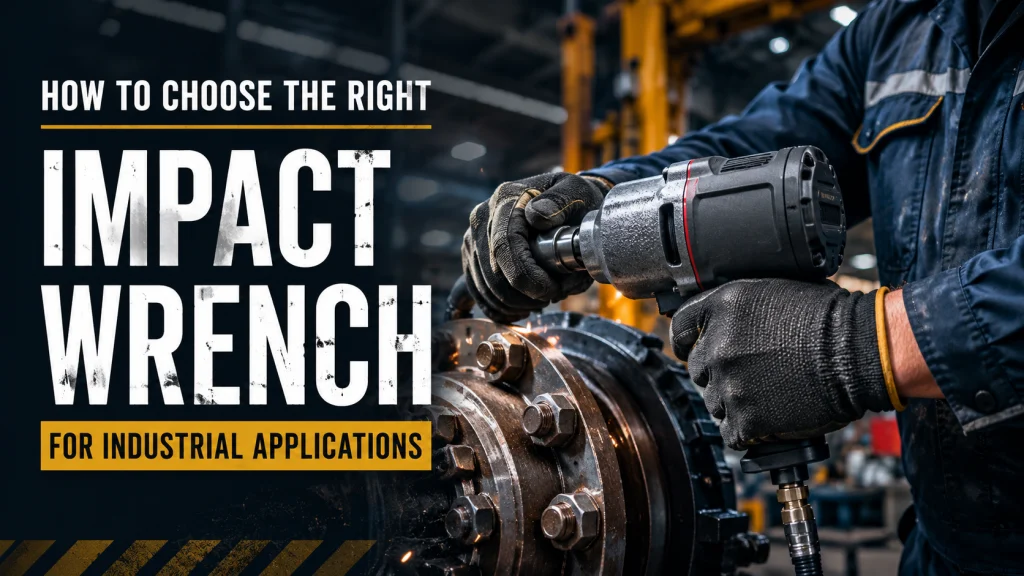
An impact wrench is one of the most important tools in industrial maintenance, automotive service, and heavy assembly. Choosing the right impact wrench is not just about buying the most powerful model on the shelf—it’s about matching torque, power source, durability, and ergonomics to your real-world application. The correct choice improves productivity, reduces operator fatigue, and helps prevent damage to fasteners and equipment. In this guide, we’ll walk through the key factors to consider so you can confidently select an impact wrench that fits your work environment and long-term operational needs.
Understand How an Impact Wrench Works
An impact wrench delivers high torque through a hammer-and-anvil mechanism that stores and releases energy in rapid bursts. This allows the tool to loosen or tighten fasteners that would be difficult or impossible to handle with standard wrenches.
Unlike continuous-rotation tools, an impact wrench applies short, powerful impacts directly to the output shaft. This reduces the amount of reactive force transferred to the operator while still producing exceptional torque. Understanding this mechanism helps you evaluate performance specs such as blows per minute (BPM), maximum torque, and speed, which all influence how efficiently the tool will perform in demanding industrial conditions.
Define Your Application and Power Source
Before selecting an impact wrench, clearly define how and where it will be used. Will it operate on a production line, in a maintenance bay, or out in the field? Power availability, mobility needs, and duty cycle all play a role.
In fixed workshop environments, many professionals rely on a pneumatic impact wrench for consistent power, durability, and long service life. These tools are commonly paired with other pneumatic tools to create a complete, air-driven system that performs well in continuous-use applications.
For mobile technicians, construction crews, or remote jobsites, a cordless impact wrench may be the better solution, offering flexibility and freedom of movement without sacrificing modern torque performance.
Match Torque, Drive Size, and Fastener Type
Selecting the correct torque range is critical. An impact wrench should comfortably exceed the torque required for your toughest fasteners, but not be so oversized that it risks stripping threads or breaking bolts.
Also consider drive size and typical fastener dimensions:
- ¼” and ⅜” drives: light assembly and maintenance
- ½” drive: general industrial and automotive work
- ¾” and 1″ drives: heavy equipment and structural applications
Matching the impact wrench to bolt size, material, and tightening requirements ensures better control, longer tool life, and safer operation.
Evaluate Ergonomics, Weight, and Durability
In industrial environments, an impact wrench is often used repeatedly over long shifts. That makes ergonomics just as important as raw power. Tool balance, grip design, vibration levels, and sound output all affect operator comfort and long-term safety.
Look for housings made from advanced composites or reinforced metals that offer both strength and reduced weight. Features such as vibration-dampening systems, well-placed triggers, and easy forward/reverse controls can significantly improve productivity while reducing fatigue and injury risk.
Conclusion: Choose an Impact Wrench That Works as Hard as You Do
The right impact wrench is one that fits your application—not just on paper, but on the job. By understanding how the tool works, defining your operating environment, selecting the correct torque range, and prioritizing ergonomics and durability, you can make a confident, long-term investment. A well-chosen impact wrench improves efficiency, protects operators, and delivers consistent performance across demanding industrial tasks. Take the time to evaluate your needs, test when possible, and build a tool lineup that supports both productivity and safety.