
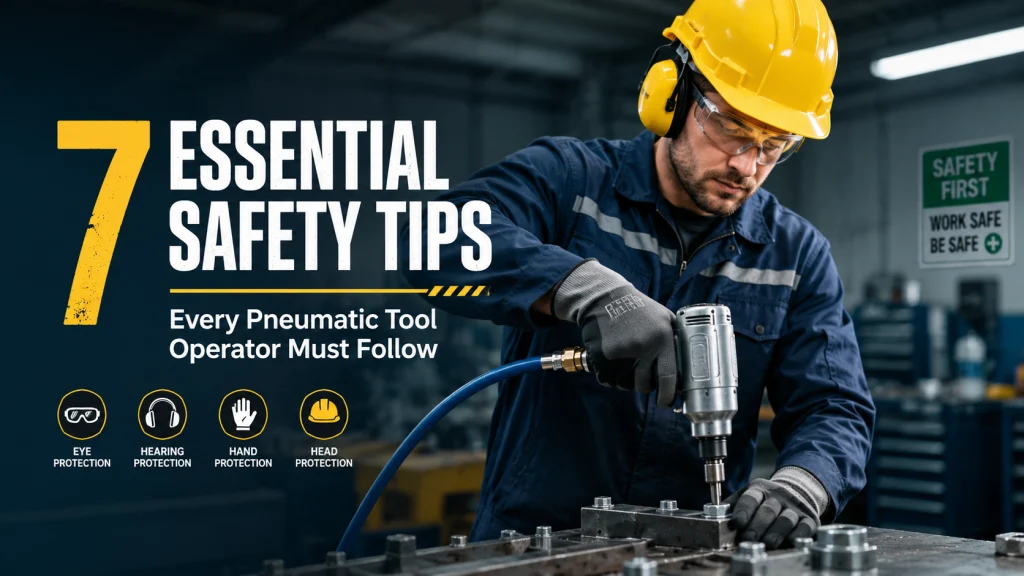
Workplace safety remains one of the most important responsibilities in any industrial environment, especially when operating pneumatic tools. These powerful air-driven devices are designed to improve efficiency and productivity, but without proper handling, they can also present serious risks. From flying debris to high-pressure air hazards, even small mistakes can lead to costly injuries or downtime.
That’s why understanding and following proper safety procedures isn’t optional — it’s essential. By adopting the right habits, wearing appropriate protective equipment, and maintaining tools correctly, operators can significantly reduce the risk of accidents while ensuring a safer, more productive workspace.
- 1 Pneumatic Tool Safety Best Practices Understanding workplace risk and compliance
- 2 Reduce Vibration and Noise Protect long-term operator health
- 3 Verify Safety Features Check guards, shut-offs, and controls
- 4 Routine Maintenance Prevent failures before they happen
- 5 Safe Operating Procedures Use tools correctly and responsibly
- 6 Wear Proper PPE Essential protection for operators
- 7 Maintain a Safe Work Area Control environmental hazards
- 8 Proper Air Line Setup Ensure safe and regulated air supply
- 9 Additional Safety Tips Extra precautions and training guidance
- 10 Conclusion Final thoughts and key takeaways
Pneumatic Tool Safety Best Practices
Not every worksite carries the same level of risk, but pneumatic tools can become hazardous in environments where dust, vapors, or flammable materials are present. In higher-risk zones, it’s essential to use tools designed and certified for those conditions. Employers should carry out proper risk assessments and ensure equipment complies with relevant safety regulations before use.
1. Reduce Exposure to Vibration and Excessive Noise
Extended exposure to vibration can contribute to hand-arm vibration syndrome (HAVS), while continuous loud noise may lead to hearing damage. Choosing low-vibration tools, limiting exposure time, and providing hearing protection can significantly reduce long-term health risks for operators.
2. Verify Built-In Safety Mechanisms Before Use
Modern pneumatic tools often include protective features such as overspeed shut-offs, guards, and torque controls. Before starting work, confirm that these safety mechanisms are functional and appropriate for the application. Proper safety features help prevent mechanical failures and accidental injuries.
3. Schedule Routine Inspection and Servicing
Well-maintained tools are safer and more reliable. Follow the manufacturer’s maintenance guidelines, regularly inspect high-wear components, and replace damaged parts promptly. Preventive servicing reduces unexpected breakdowns and minimizes workplace hazards.
4. Follow Proper Operating Procedures at All Times
Operators should be trained to use each tool correctly and understand its limitations. Always follow the manufacturer’s recommendations and company safety policies. Using the right tool and accessory for the task improves both safety and performance.
5. Wear the Correct Personal Protective Equipment (PPE)
Appropriate PPE is a critical line of defense. Depending on the task, this may include safety glasses, gloves, hearing protection, and protective footwear. Consistently wearing the correct equipment helps reduce the severity of potential injuries.
6. Maintain a Hazard-Free Work Area
A safe environment supports safe tool operation. Ensure adequate ventilation when dust is present, secure the workpiece properly, and maintain stable footing. Be mindful of confined spaces or elevated work areas where additional precautions may be required.
7. Set Up and Maintain Air Supply Lines Correctly
Compressed air systems must deliver clean, regulated air at the correct pressure for safe operation. Installing a filter-regulator-lubricator (FRL) unit and checking hoses for wear can prevent pressure issues and hose whip incidents. A properly configured air line improves both safety and tool lifespan.
Additional Safety Recommendations
Beyond equipment checks, employers should foster a strong safety culture through regular training and hazard assessments. Reviewing procedures, reinforcing best practices, and encouraging reporting of potential risks all contribute to a safer and more efficient workplace.
explore our range of Pneumatic tools
Conclusion
Pneumatic tools are invaluable in industrial and construction settings, offering power, precision, and efficiency. However, their performance should never come at the expense of safety. By minimizing vibration and noise exposure, confirming safety features, maintaining equipment regularly, and using proper PPE, operators can significantly reduce the likelihood of workplace injuries.
Equally important is creating a safe environment and ensuring the air supply system is properly installed and maintained. When these safety practices become standard procedure rather than afterthoughts, productivity improves, downtime decreases, and most importantly, everyone goes home safely.
Prioritizing pneumatic tool safety isn’t just about compliance — it’s about building a responsible and professional workplace culture.