
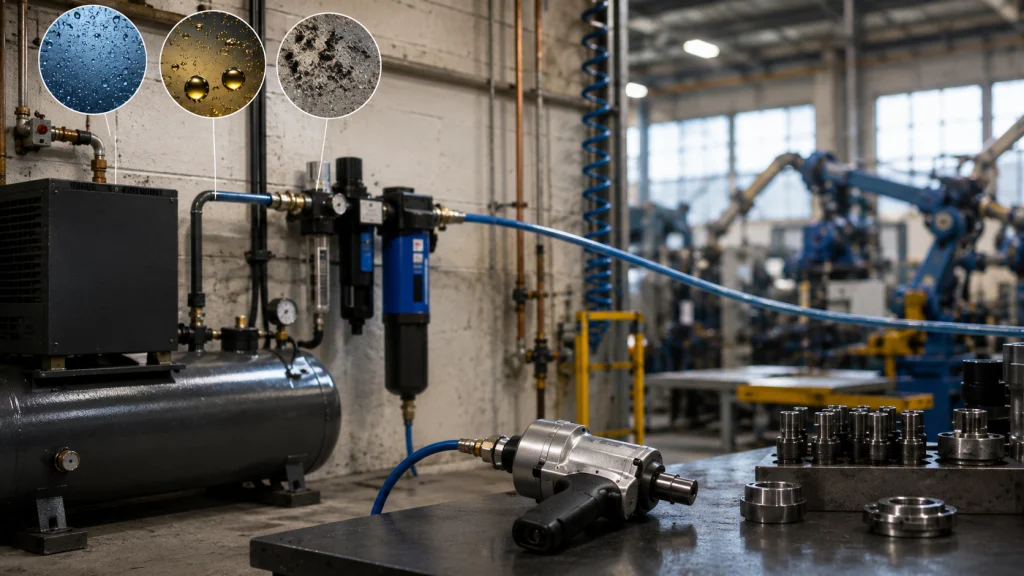
Air treatment is a critical part of any compressed air system, especially in industrial environments where reliability and performance matter. When air is compressed, it naturally carries moisture, oil, dust, and other contaminants that can damage tools and reduce efficiency. Proper air treatment ensures that only clean, dry air reaches your equipment, helping protect your investment and maintain consistent performance.
For workshops and production facilities using professional pneumatic equipment, air quality is just as important as tool quality.
- 1 What is Air Treatment? Overview of compressed air treatment systems
- 2 Common Contaminants in Air Systems Moisture, oil, and particulate explained
- 3 Air Treatment Components Filters, dryers, regulators and more
- 4 Importance of Air Treatment Why clean air protects equipment and productivity
- 5 Maintaining Air Treatment Equipment Servicing and inspection best practices
- 6 Conclusion Key takeaways on air system efficiency
What Is Air Treatment in Compressed Air Systems?
Air treatment refers to the processes and components used to clean and condition compressed air after it leaves the compressor. During compression, airborne contaminants become concentrated, creating moisture buildup and particle contamination inside the air supply.
An effective air treatment system removes these unwanted elements before the air is delivered to tools or machinery. This helps prevent corrosion, internal wear, air leaks, and unexpected equipment failures.
Common Contaminants in Compressed Air
Even in controlled environments, compressed air can contain several harmful contaminants, including:
- Moisture: Causes rust, freezing, and reduced air efficiency
- Oil particles: Can damage seals and contaminate finished work
- Dust and solid debris: Lead to abrasion and premature tool wear
- Condensate buildup: Reduces airflow and stresses system components
Without proper air treatment, these contaminants can significantly shorten the lifespan of pneumatic tools and air-powered equipment.
Key Components of an Air Treatment System
Air Filters
Air filters remove solid particles, dirt, rust, and oil aerosols from compressed air. Depending on the application, different filter grades may be required to achieve the desired air cleanliness.
Compressed Air Dryers
Compressed air dryers remove moisture by lowering the dew point of the air. Refrigerated dryers are commonly used for general industrial applications, while desiccant dryers provide extremely dry air for sensitive environments.
Water Separators
Water separators remove liquid moisture early in the system, preventing excessive water from reaching filters, dryers, and tools.
Condensate Drains
Condensate drains safely remove collected liquids from air receivers, filters, and dryers, helping prevent water accumulation and internal damage.
Why Air Treatment Is Essential for Pneumatic Tools
Clean air directly affects tool performance and reliability. Poor air quality can cause power loss, inconsistent torque, and increased maintenance requirements. This is especially important for high-performance equipment from trusted brands such as chicago pneumatic, where precision and durability are expected.
Proper air treatment also supports the long-term health of pneumatic tools, including heavy-duty equipment like a pneumatic impact wrench, where moisture or debris can quickly lead to internal wear.
To further extend tool life, regular maintenance is equally important. Learn more in our related article:
The Essential Guide to Maintaining Your Handheld Tools
Maintaining Your Air Treatment Equipment
Air treatment components require routine inspection and servicing to remain effective. Best practices include:
- Replacing filter elements at recommended intervals
- Monitoring dryer performance and dew point levels
- Ensuring condensate drains are operating correctly
- Inspecting air lines for leaks or corrosion
Regular maintenance not only protects tools but also improves overall system efficiency and reduces downtime.
Conclusion
Air treatment is a vital part of any compressed air system, playing a key role in protecting tools, improving performance, and reducing long-term operating costs. By removing moisture, oil, and contaminants, air treatment ensures clean, consistent airflow for demanding industrial applications.
Whether you’re running a small workshop or a large-scale operation, investing in the right air treatment solution helps ensure reliable performance and extends the life of your pneumatic equipment.